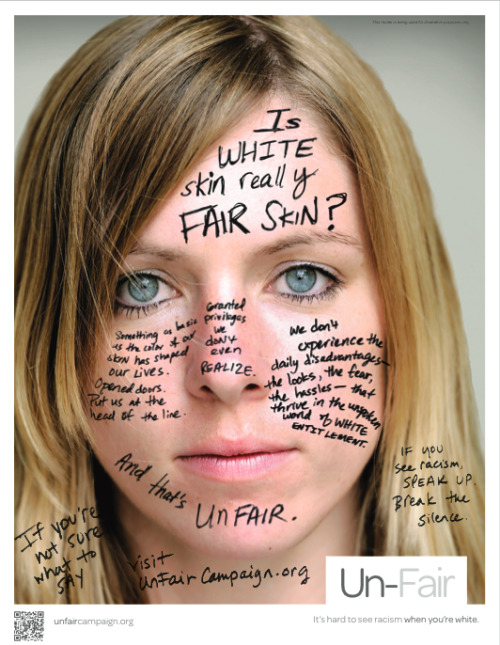
Inside the mind of a kind of quirky, pretty stubborn, way too opinionated, twenty-something, heteroflexible Black female newly employed up-and-moved-to-DC Princeton GRADUATE who's just trying to sort out her life. An uninhibited celebration of all that is me, this blog is an exercise in self-discovery and live-with-your-heart-wide-open-ness. Though I make respect a habit, I will not always be politically correct, and I believe in the power of making audiences uncomfortable to inspire change.
"The thing that sucks about Girls and Seinfeld and Sex and the City and every other TV show like them isn’t that they don’t include strong characters focusing on the problems facing blacks and Latinos in America today. The thing that sucks about those shows is that millions of black people look at them and can relate on so many levels to Hannah Horvath and Charlotte York and George Costanza, and yet those characters never look like us. The guys begging for money look like us. The mad black chicks telling white ladies to stay away from their families look like us. Always a gangster, never a rich kid whose parents are both college professors. After a while, the disparity between our affinity for these shows and their lack of affinity towards us puts reality into stark relief: When we look at Lena Dunham and Jerry Seinfeld, we see people with whom we have a lot in common. When they look at us, they see strangers."
It may surprise much of my readership, but I actually pretty vehemently disagree with this quote as a blanket statement.
First, I would like to henceforth officially dismiss the term "[race/ethnicity] culture" from any and all popular discourse. Every group of people, no matter how specific you get to narrow them down, has cultures, plural. Urban Northern Black culture is very different from rural Southern Black culture, which is very different from Afro-Caribbean culture, which is very different from the cultures of recent African immigrants. The same goes for the cultures of various places in Latin America--Mexican culture is not Cuban culture is not Dominican culture is not Brazilian culture, etc. Even White culture is not a monolith--think about Midwestern US culture v. Californian surfer culture v. preppy New England culture. This is just an improper standpoint from which to discuss anything.
Secondly, I feel like this quote assumes that people of color grow up in environments mainly or entirely composed of other people of color, and have to venture out into the White world and fight and learn on their feet to make it because everything is so different. Bitch, please. My first best friend was White (as were the overwhelming majority of my closest friends until college), the first boy I couples skated with at our local skating rink was White, my first kiss was with a White boy, all of my teachers were White until high school. I could go on. Things typically described as "Black culture" involved much more active trying to learn on my part, as they were not part of my everyday lived experiences. What are you calling White culture here, anyway? Are you equating it with mainstream culture? Like, pop music and sitcoms? Because NSYNC was the first concert I had tickets to and Boy Meets World and Sabrina the Teenage Witch were as much a part of my childhood as The Cosby Show and Sister, Sister. You're arrogant as fuck if you assume that all Black and Brown people grew up outside of the mainstream.
Thirdly, and this is related to my first point, I don't think that every time a White person, or a person of any race, for that matter, adopts things that are generally associated with persons of another race, they do so with malice in their hearts. Also, I don't agree with the idea that people of a certain race somehow have a more authentic claim to certain elements generally assumed under "[that race]'s culture"--for example, during a conversation with WYSIWYG a few weeks ago, I shocked her by saying
"I don't really see why teen white boy asshat who thinks he's legit because he listens to rap is really that much different than teen black boy asshat who thinks he's legit because he listens to rap. Sure, we started it, but why does that give us some universal claim of authentically owning [rap music] or something? It's a culture you can play into or not play into."
And that's a viewpoint I stand by. If you try to tell me there are no Black and Brown people in the world making ghetto jokes, you're a damned liar. I don't see why the offensiveness of a 'ghetto' joke should vary depending upon the color of the skin of the person who makes the joke, just like I don't see why we assume that Black and Brown people are somehow more significantly linked to "the ghetto" than are White people. You're either of that kind of a background/situation or you're not. End of story.
The trailer played when I saw Anna Karenina and then again when I saw Perks of Being a Wallflower, and both times elicited a visceral reaction of disgust from me, like seeing a cockroach or getting a big whiff of garbage truck while I'm walking to work. The words that flash across the screen during the trailer are as follows: "In 2004...tragedy struck southeast Asia...This is one family's true story of survival."
...Note that the entire premise of the film has been established now that we are 47 seconds into the trailer, and we. have. yet. to. see. a. southeast. Asian. person. Because OBVIOUSLY the ONLY possible way to make a movie about the tsunami that will do well in an American market is to whitewash it so completely that the 75,000+ Southeast Asian people who died in this tragedy aren't even mentioned, so that the focus of the film is rather a British family who was vacationing at the time, because then it's like this could happen to you, American moviegoer who is presumed to be white and wealthy enough for vacationing in Southeast Asia to be a feasible possibility in your life. Because Southeast Asians aren't people you can relate to, obviously. Their deaths are a statistic--this British family's true story of survival is an emotional triumph!
If you can stomach watching the rest of the trailer, you see that we finally see people of color at a minute and 28 seconds in! The movie is set in Southeast Asia and it took 60% of the trailer before we saw a person of color. Okay. It's actually a group of people of color. What are they going to do? Oooh look, it's as if they've been magically conjured to save the poor injured white woman, who will weep and profess her thankfulness. Oh, they're gone so quickly, appearing only for a few seconds. Wait...we never see them again? BUT I THOUGHT THIS MOVIE WAS ABOUT A TRAGEDY IN SOUTHEAST ASIA.
To paraphrase the quote at the end of the trailer, "Nothing is more powerful than the human spirit people's sympathy for unsuspecting White people."
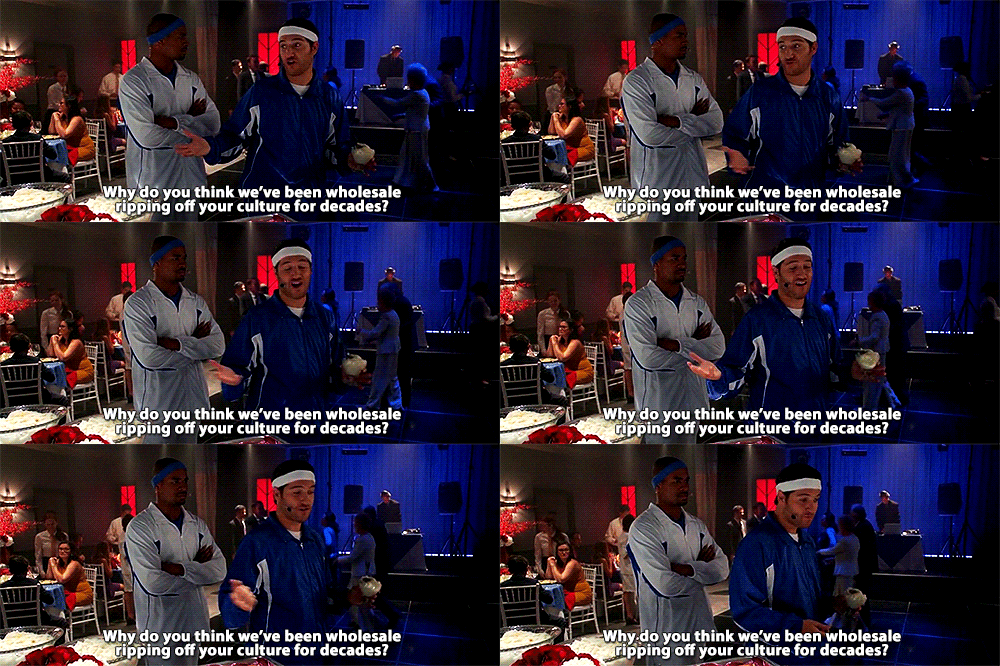
This dude who so perfectly explains white privilege and why Shit White Girls Say to Black Girls ISN'T FUCKING RACIST. It's just the first time white people see themselves being stereotyped and misappropriated in something this popular.
It's like All That! grew up and got a lot more controversial!
But, for the record, I do want to recognize that privileged people of all races experience problems like this, and even though white people are far more likely to be in that privileged category, saying that these are problems that affect only white people is problematic and contributes to the narrative of POC as invariably poor. That being said, this is still amusing:
I have heard these things in real life, I swear. And not just from White girls, but people of various non-Black-woman race/gender combinations. "It's almost like you're not Black" is actually too close to home; I'm writing about times that has been said to me in my personal memoir on Blackness for my Comparative Literature class. Fuck other people feeling like they have some sort of authority to tell me what I'm supposed to be as a Black woman. Hell, even as a person. But to go along with the theme of the video, I shall reveal what I believe is the most ridiculous thing a white girl has ever said to me:
"It's like I'm a big Black woman trapped inside a skinny white girl's body!"
She later became a dear friend of mine, but saying this like the second time we'd ever met? The opposite of cool.
This is reblogged from The Good Men Project, and I would like to rename it "How to Talk to Ignorant People about Life," because it is a widely known fact that not all White people actually need talking to about race, and there are people of every social category imaginable that need talking to about SOMETHING.
"1. Do not debate. Declare.
I’ve come to realize that debating is just another derailing tactic.
If you come across a white American who wants to argue, cloud the
issue, split hairs, etc., then you’ve reached the end of the
conversation – period. Social justice is not a cult; it’s not your job
to “convert” people. They have to choose to either be a decent human
being or to support the racist colonialist system that is America. (<---- THIS. RIGHT. HERE.)
If they talk a lot about their “opinions”, end the conversation.
If they ask you if you really do experience racism, ask them why they’re asking you that.
End the conversation if they start with lines like,
“I can’t imagine”
“I refuse to believe”
“I just don’t see”
And no, you do not have to be nice about it. 2. Racial discussion is not an “exchange” of ideas.
This isn’t about what we can learn from each other – this is about
you learning from me, and you’re already behind by four centuries. 3. Do not end racial discussions on a positive note.
If white people end racial discussions on an optimistic,
the-future-is-bright note, they’re happy, they feel absolved, and they
tell themselves that things “will eventually work themselves out”.
That’s why they have to leave these discussions bothered, troubled, and
deeply perturbed.
We don’t get a slow, gentle, candy-coated introduction to the pains
of American racism. Never have. White folks shouldn’t get to either. 4. Maintain realistic expectations.
What leads to frustration is most of us operate under the misguided
notion that intelligence is all someone needs to learn something.
Learning, in fact, requires additional components to intelligence, like
consistent practice, research, recall, overall self-discipline, and a
need for the absolute truth of things. White privilege conditions much
of this out of most white Americans by the time they hit puberty.
5. Stop being afraid.
You don’t need white Americans to like you – if they cross the line,
make them uncomfortable. We have already overcome and survived a lot in
this country and contrary to popular belief, we did so with an
overwhelming lack of support from white America. So do not doubt your
worth or tone down your voice or temper your strength.
If you’re being dehumanized socially, assert yourself and walk way.
If you’re being dehumanized occupationally or academically…lawsuit.
Tolerance is a bullshit term, and we need to stop tolerating from hereon
out, online and in real life – period. 6. Stop referring them to Tim Wise.
Since referring white people to Tim Wise as their introduction to
social justice hasn’t had the necessary effect, stop doing it. Instead
refer them to David S. Reynolds’s “John Brown, Abolitionist: The Man Who
Killed Slavery, Sparked the Civil War, and Seeded Civil Rights” (2006)."
K and I went to see it last night. I must say, right off the bat, that my expectations for this movie were greatly surpassed. I laughed, I cried, I was angry, I was sympathetic...this was, by most of the measures by which I usually judge movies, a very good movie. It was the kind of movie that makes me think I should be calling it a "film." It was incredibly well-acted. So much attention was paid to detail, from the clothing to the decorations in the homes to the cars to the clips of news footage from the Civil Rights Movement. It was just as sexist and racist and racistandsexist as it needed to be for the period. I looked at and listened to some of these characters and saw women I know. I shouldn't have just assumed that a White woman couldn't portray Black women with any sort of authenticity. I have been proven wrong on that account. Also, I think they did an excellent job of balancing the two stories here: one about Black women standing up for themselves and one about a brave White woman who fought against all the racists. I was led to believe that the story was more about the White woman helping the maids, but they had WAY more autonomy than I was expecting to be presented with, and I am surprised and grateful. Yes, this was a "let's-alleviate-a-little-bit-of-White-people's-guilt" movie, which The Oreo Experience [a blog I like when I think about it as an exercise in exaggeration and social criticism, but which saddens me whenever I think she might be serious] renames as the "White People to the Rescue" movie. You know this genre--The Blind Side, Driving Miss Daisy, most movies about education reform, almost any movie about a predominantly black sports team and a white coach--where there is a person of color or a group of people of color who obviously need help and have the power to be something [which implies that narratives that don't follow the American Nightmare Dream to the letter are "nothing"] or maybe even to help themselves, but don't realize this until some benevolent White [or, more recently, racially ambiguous] person steps in to show them how to achieve. It's a pretty popular unofficial genre. But this was a GOOD white guilt movie, if such a thing can exist. I say that for two reasons. Reason 1: A lot of white guilt movies just have, you know, some privileged White people, well, feeling guilty and doing charitable things to quell that guilt. We also occasionally get the used-to-be-a-hardcore-racist-but-sees-the-error-of-his/her-ways White person in these movies. What we don't usually get, but this film gave us, is the hardcore-racist-White-person-who-despite-being-socially-criticized-and-exposed-to-the-other-side-of-the-story-DOES-NOT-STOP-BEING-A-HARDCORE-RACIST White person. But this film gave us those people. I said it to K last night, and I'll say it again now [warning, this is NOT P.C.]: This movie made me remember what it's like to hate White people. Like I would be in jail right now if it were possible to walk into a movie and choke a bitch, because I was DONE with those women quite a few times. The fact that our White protagonist was clearly the exception to the rule in Jackson, Mississippi, and could not convince the majority of the other people in her social circle to come over to the good side is unusual and daring for this genre. And I think this is productive, because while guilt isn't a pleasant feeling, I don't think anyone could sit through the beginning of this movie without feeling profoundly uncomfortable, regardless of race. And being uncomfortable is promising for those of us who advocate change. Reason 2: The White protagonist didn't don a red cape and put an S on her chest and swoop in to save these women. She didn't boldly go where no White woman had gone before and advocate for the plight of these women publicly. HER ASS WAS HIDING. She wasn't Freedom-Writers-what-the-fuck-are-you-doing-caring-about-these-[derogatory slur] until the very end after the book was published; before then, she interviewed women behind closed doors and drawn curtains, strategically avoided saying she was refusing to publish a racist proposition in the newspaper because she disagreed with it, and she watched the news of the Movement on TV rather than going to march. I'm not saying she wasn't brave or courageous, I'm just saying her bravery was undercover. She remained overtly only a little less than neutral in public, and even in the end no one could prove what she had done. I like that she didn't take all the credit here. I like that this movie is about the two maids who made her project possible just as much as it's about her. I like that they get more recognition from their community than she gets from her own. Bonus reason: I like that racism didn't blindly lessen in severity by generation. The oldest White character we see is fighting her daughter for her maid's rights a lot, though she can rarely do anything to stop her. But then the movie had to come to a neat little close, as movies must do, and then everything I hate about this genre and was hoping to avoid reared its ugly head. Our benevolent White protagonist spreads the wealth from the book's earnings, then high-tails it out of town, off to a fancy job in NYC after having managed to change very little for the Black women of Jackson except their mindsets. The Black women of Jackson are now getting even further demonized/taken advantage of by White women, to the point where the main maid loses her job and walks determinedly down the street, talking in a lofty manner about how much it mattered to her that someone wondered what it was like to be her, and about finding her voice and becoming a writer. That end scene reminded me a lot of Precious: she hasn't a damn thing going for her--no hope of getting a job in that town ever again, no money to move, few skills besides literacy and childcare/housekeeping, no family to rely on...I worry. But more than any of those practical things, I worry that this ending leaves a happy taste in audience's mouths about how far we've come or some shit about how empowerment is psychological. Fuck that shit, man. Yes, getting your mind right is a critical component of empowering oneself, but it doesn't mean SHIT if you're still living under a system of oppression. So there were points and deductions. Other deductions included propagating the happy Black mammy role when the White female protagonist remembered her own childhood maid/nanny (whom she didn't imagine having had any of the same struggles as the women she interviewed), an abusive Black husband, and a focus on Black women as "dirty". Violence is present without being addressed--wealthy white woman suggests her Black maid leave her abusive husband, despite the fact that she wouldn't be able to care for her children on her (and her daughter's) incomes alone. The White protagonist gets to walk away from everything leaving the people she endangered-by-helping with uncertain fates. Black women still just have to be strong and take White people's shit. The larger Civil Rights Movement is present--as a person who knows the intimate details of the Mississippi Burning era, watching the small news clip of Medgar Evers's death and hearing the characters talk about his family undid me--but the role played by regular women like our characters in the larger movement isn't really addressed either; they're all anonymous. They cannot be recognized for their contribution, as most of the people who fought this battle will never be recognized--that might actually be a point of non-romanticization that I approve of, actually. I like that happiness existed right alongside pain and disgust in this film--that felt real. And the sisterhood and standing up for what you believe in and having courage themes really did come through. Some of these deductions get a point or two back for raising issues that still need to be addressed, though. All in all, it was a good film. Could have avoided a few potholes, but it surpassed my expectations greatly.
On the one hand, sisterhood! friendship! standing up for what you believe in! stories that haven't been told! a movie about Black women! On the other hand, though, yet another tired old film about Black people whose lives really are interesting and meaningful, but made so only through the intervention of a benevolent White woman! (The Blind Side, anybody?) celebration of Black women's stories as long as they're told from a White woman's perspective! making people feel like the conditions of oppressed minorities weren't (aren't) so bad!
Some people are telling me I'm making too big a deal about this. That there are [much less successful] movies and books about Black persons who stand up and tell their own stories. That I shouldn't look at these things as Black v. White, but in terms of other divisions, like religion or class. That I should see the patronizing White female savior as really just a friend like any other friend, and not pay attention at all to all the privileges she has over her Black female domestics "friends". That I should validate her for working against societal expectations by caring about these Black women. Or, my fucking favorite, that Hollywood isn't about historical accuracy or truth-telling, but rather is for entertainment purposes only, and presumably has absolutely no societal responsibility to speak of. That it somehow shouldn't bother me that, with few exceptions, the most widely popular films that feature or are about Black people offer those characters little more than belittlement and backhanded compliments. Self-sufficiency and positive narratives are few and far between.
I'm terrified that this will someday get shown/read in history classes in high school, and be taken as an accurate representation of what life was like for these women. NOTHING GOOD can come of members of a dominant group writing the history of members of a marginalized group. Nothing. So when someone asks me what I expected from a White woman's telling of the story, I say this: that I expect White people to finally learn that maybe they shouldn't be trying to tell the narratives of Black experiences. But alas, they will never learn this, because this book was wildly successful, and the film most likely will be too, because unlike when a Black person tries to talk about a Black experience, this appeals to White audiences [sugar-coating history has a tendency to do that].
The friend I'm arguing with on Facebook [I hate Facebook arguments] raises the incredibly valid point that the representations of Blackness coming from within our community are arguably worse. I agree 100%, a la the post immediately prior to this one, but that just means I'm not going to stand for either one.
My friend says the only way to change this is to go out and do something about it, instead of just bitching about what's wrong with the images we're being presented with. Again, I agree 100%, but we have to recognize that if a Black woman had written a novel about Black women's experiences as maids in the South, it would be relegated to the huge pile of "African-American literature to be ignored by the general public unless one has a very progressive high school English teacher" and the idea of a movie deal would be laughable. So, as I am not a filmmaker or a screenwriter, but an academic, all I can do is talk about why I don't think these images are acceptable, why I don't think these movies will do anything good for anyone (except put money in the hands of the people who made them, and making wealthy White people feel less guilty--which I'm pretty sure is only beneficial to them, not to the people of color and/or in poverty who could use a program or two that might be created [or, at the very least, not ripped to shreds] by people who have stopped recognizing that guilt is entirely appropriate). Maybe wanting to hold Hollywood to some level of social responsibility is naive of me, but how can we change the dominant cultural perceptions of a community if only narratives that perpetuate those perceptions are allowed to be seen/heard?
I suppose I have to see it now that I've talked so much shit about it though, huh? Damn.
I know you meant well. Or at least, that you didn't mean me any harm by what you said. I must admit, it was slightly amusing watching you struggle to dig yourself out of this hole you realized you'd inadvertently dug. It led to an interesting discussion about the differences between "white culture" (after questioning what exactly white culture is and whether it can be separated from mainstream American culture more broadly) and Jewish culture--you tried to draw an analogy between my personality:blackness::Jewishness:whiteness, and really, I want to commend your effort. I guess majoring in Psychology, Philosophy, and Economics makes you more attuned to the reality of cultural sensitivities and how to handle them with finesse more than most of my non-ethnic-minority friends. And don't worry, you're far from the first person to say this (or something similarly-themed) to me. I just a) hoped I had embraced my blackness enough in college to dispel such observations, and b) can't help but feel as though I should be offended, either on my own behalf, on that of black people as an amorphous group, or both. I cannot blame you--and am not trying to--for your statement because, as I learned during the Black Solidarity Conference this year, even [at the very least some, a concentration of whom I interacted with at Yale in February] of my peers and current race scholars don't see me as fitting into the larger overall picture of blackness either. But don't think for a second I'm condoning this, because I'm not. The fact that lots of people, even insiders, do this, does not in any way make it any more acceptable, or any less racist. So, friend, peers, scholars, larger world, I must again beg you to reconsider the apparently negatively themed definition you give to blackness. Who are you excluding from that group, and why, and what do you presume gives you the authority to make those cuts? I ask you to remember that race itself is a social construct, an idea that our forefathers made up to promote white privilege and deny persons with whom they were uncomfortable (or did not even consider to be persons) the rights of citizenship or even simply the rights of man--sure, it's one made visible by the color of my skin, the texture of my hair, the breadth of my nose, but again, these are all things that human beings themselves defined as fitting the construct of blackness, not inherent distinctions.
We struggled to define white culture when trying to establish Jewish culture's distinctiveness. I would like to raise the challenge that black culture, and (though I know little about it, everything I know about the world as a sociologist or even as an observant member of society leads me to believe that) even Jewish culture cannot be limited to one narrow definition against which to pose some other narrowly defined cultural group. Every mainstream culture has a counter-culture, usually multiple counter-cultures. There is always an underground, a counter-movement, even the smallest of revolutions. There is always someone who is unafraid to open their eyes, see their surroundings for what they really are, and say, "Hey, wait, this isn't what I want. This isn't correct/right/fair/justified/appropriate/normal/what-I-should-be-striving-for." There is always someone pushing for change. So, I have more rock on my computer than hip-hop/rap. That doesn't mean I can't spit a T.I. verse back at you, and it doesn't mean I'm not black. I will never fight someone because they scuffed up my sneakers, most likely because I'm in a cute pair of flats. That doesn't mean I'm not black. I have owned exactly two pieces of clothing from a "black" clothing brand in my lifetime, and they were both from JCPenney on clearance. (I can't turn down a good deal.) That doesn't mean I'm not black. I'm not a great dancer--I learned how to two-step less than two months ago and I cannot (and may never be able to) pop or lock (though I can drop it). That doesn't mean I'm not black. Enunciation and complete complex sentences define my natural linguistic structure; while that might make my 6-year-old cousin interrupt Thanksgiving dinner to start the following exchange:
V: Maya, why do you talk like that?
Me: Talk like what?
V: All...proper.
it doesn't mean I'm not black. I am and will continue to become highly educated at very elite universities, where my study of blackness and black peoples should not separate me from them. That doesn't mean I'm not black. I disdain of the use of the word nigg- by any and all persons, much in the same manner that I disapprove of faggot and cunt and a lot of other entirely inappropriate derogatory terms. It doesn't mean I'm not black. I don't like collard greens, but I won't eat macaroni and cheese that hasn't been in an oven and trust me, your sweet tea isn't sweet enough for me. This doesn't mean I'm not black. I don't have fake gold hoop earrings with my name in them, but again...I think you're getting the picture here.
I guess the more significant way to approach this is to examine what means I am black, besides my aforementioned skin, hair, and nose. 1) My recognition of the history this country tries to hide and the havoc that history and its hidden status wreaks on the black population even in 2011. 1b) My disdain for the term post-racial, no matter how you're defining it. Like my homeboy Brother West says, Race Matters. 2) In my house, Santa and Baby Jesus were both black, and though I didn't grow up to believe in either of them, I learned to see the world from a black person's perspective. I learned about the black tax (which I still believe in), and I learned the importance of remembering where you came from, because no one else is going to. I learned Kwanzaa and sweet potato pie and the foods you have to eat on New Year's to bring good fortune. I learned everyone from the Temptations to India.Arie. So I would like to take this time, world at large, to throw your assumptions about my cultural background back in your face. 3) In line with your mainstream negatively-themed ideas of blackness, world at large, which I do not agree with but feel the need to address, I am no stranger to struggle. I know what it is to be on food stamps. I know what it is to have the electricity/water/cell phone cut off due to nonpayment of the bill. I know what it is to not have food in the house. But knowing all those things taught me to dream, taught me to work towards a goal, taught me dedication and resilience, and combined with a lot of luck, those things have made me successful. Fact: either success nor lack of it are definitive of status as a racial minority. 4) R&B/Neo-Soul is my favorite genre of music, which is just as rooted in the black community as hip-hop. 5) My ideal breakfast features grits. 6) AND MOST IMPORTANTLY, I am black because I SAID SO. Honestly, that's the only reason you should need. Because this is an identity I have adopted as belonging to me and people like me and lots of people who aren't like me in many ways EXCEPT for their adoption of this same identity. If the work I'm just beginning on racial identity and college students has taught me anything, it is that beyond being a social construct and a category that people will try to place you in no matter what, race and your identification with your race is a choice. Whether that choice is manifested through organizational involvement, circles of friends, or something as simple as being the little guy's advocate in a classroom debate, it is an active decision. It is a decision I have made, it is an identity that is important to me, and while I certainly don't want it to be the only thing you categorize me as, I do want you to stretch your notions of blackness to include me. In fact, today, tomorrow, and every day until you concede, world at large, I will do nothing short of demanding it.