Showing posts with label poverty. Show all posts

Wednesday, December 12, 2012

Sometimes it's hard being a social scientist who grew up poor.

I'm listening to a presentation on an in-depth-interview-based study of SNAP and low-income family food security at work. It's still really, excruciatingly difficult for me to listen to academics and other researchers talk about coping strategies that my family used, ways of living that I didn't know weren't normal for the majority of my childhood.
Using my new technical jargon from being in my field of study/line of work, I now have the vocabulary to say that while I was growing up, my family often fluctuated between being food secure and food insecure. I remember being shocked when I would go to friends' houses and be shocked by the fact that they had cabinets full of snacks, and would open the cupboards and offer me whatever I'd like. Food was regulated in our house. You had to ask if you could have a bowl of cereal--and it was only supposed to be before school in the morning, not as an after-school snack. We never had cookies or snack cakes lying around. 

The refrigerator being full happened once a month, after my mom's first paycheck, and the rest of the month was spent watching it slowly dwindle. The second paycheck had to pay the rent (later, the mortgage) and the bills, so we got used to opening the fridge knowing there was little in there. Fresh fruits were a rarity, because they didn't last long enough to be worth their price--we had fruit cups. Jello was fruit. We clipped coupons. To this day, when I go to the grocery store, I find it difficult to pass by something I eat that is on sale without buying it. Looking back, I remember my mom making dinner for my brother, sister, and I, and not eating herself. When I was a kid, I believed that she wasn't hungry. I know better now. I was on free lunch through elementary school, and I honestly don't know how we would have survived otherwise. Summers were especially hard because suddenly we had to fend for ourselves.

The lecturer said that the first bill to get skipped when families are short on food funding is cable and/or internet, the second is the cell phone, and the third is the utilities.I know that there were bills we alternated paying--you can skip the electric bill for a month before they cut your lights off. The lecturer is calling this "robbing Peter to pay Paul." I thought that was just how the world worked. I remember once, when I was in 5th or 6th grade, our water got shut off, and we didn't have the money to cover what we owed, so we went to Walmart and bought the cheapest jugs of water they had, and filled up the bathtub. My brother, sister, and I all bathed in that cold water for two days while we waited for my mom and stepdad to scrounge up the money to turn the water back on. Cable was a luxury. We quickly learned not to ask why the channels were gone, or when they'd be back. We didn't turn the heat on until there was snow on the ground, if then. We NEVER turned the AC on. That's what blankets and windows are for. We went without a car for months because we couldn't afford repairs, and the cost of my mom taking the bus to and from work during the intervening time just took money away from other necessities.

Even now, I helped my mom and grandmother pay for Thanksgiving this year. Since I went away to college, money has traded hands between my mother and I one way only, and not the way you'd expect--I know that I am a lifeline for my mother in the way my grandmother used to be when she was working. I worry that she still isn't turning her heat on early enough, or that the fridge is still near-empty towards the end of the month, now that we're both paying for my little sister to go to school. I marvel at how effectively my mom managed our un-awareness of how short we were on money, food, and other necessities, and I worry about what she does and doesn't tell me now. Insulation is scary.

Monday, September 26, 2011

Despite my previous post,

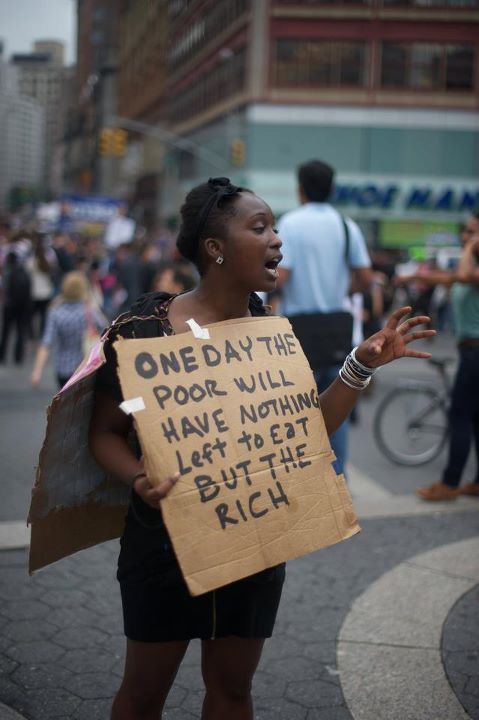
I wonder which side of this line I fall on. I go to the number one University in the world, and there is less than $200 in my bank account, and even that is already promised away. I have a job, but also a giant bill coming my way in November, and as much of the money I make as possible has to be saved in light of that.  I suppose I fall into an ambiguous middle category called "privileged".

Reblogged from Indie. Radiant.
 

Tuesday, July 19, 2011

Two Sides of the Same Coin?

Dallas's housing assistance waitlist opened up for the first time in 5 years last week, and despite the fact that only 100 spots were being offered, over 21,000 people entered the lottery. They started lining up outside the office the night before, and the line was eventually near a mile long. This line was full of infants, children, women, and senior citizens (women, children, and the elderly are the most likely groups of people to be impoverished), and eight people were injured. More info here.
The only thing my brain can scrounge up to compare this to is all the crazies who line up for Black Friday sales within minutes of finish their Thanksgiving dinners. I'm thankful for...this 80-inch flatscreen I'm about to stay up all night waiting to buy. Right. I remember my freshman year, an employee was TRAMPLED TO DEATH opening the doors at Walmart on Black Friday. 
Death by American greed and reckless desire for all things shiny on one hand. Injury by American poverty and reckless desire for decent living conditions on the other. The disappointment shared by those who weren't first in line binding them together. Two sides of the same sad coin.

Monday, July 4, 2011

2nd 30 Day Letter Challenge: Day 17--Letter to a Politician: Freddie D and my thoughts this 4th of July

Dear American Politicians,

This letter contains excerpts from Frederick Douglass's 1852 speech, "What to the Slave is the Fourth of July?" 
1. "This, for the purpose of this celebration, is the 4th of July. It is the birthday of your National Independence, and of your political freedom. This, to you, is what the Passover was to the emancipated people of God. It carries your minds back to the day, and to the act of your great deliverance; and to the signs, and to the wonders, associated with that act, and that day. This celebration also marks the beginning of another year of your national life; and reminds you that the Republic of America is now 76 years old. I am glad, fellow-citizens, that your nation is so young. Seventy-six years, though a good old age for a man, is but a mere speck in the life of a nation. Three score years and ten is the allotted time for individual men; but nations number their years by thousands. According to this fact, you are, even now, only in the beginning of your national career, still lingering in the period of childhood. I repeat, I am glad this is so. There is hope in the thought, and hope is much needed, under the dark clouds which lower above the horizon. The eye of the reformer is met with angry flashes, portending disastrous times; but his heart may well beat lighter at the thought that America is young, and that she is still in the impressible stage of her existence. May he not hope that high lessons of wisdom, of justice and of truth, will yet give direction to her destiny? Were the nation older, the patriot’s heart might be sadder, and the reformer’s brow heavier. Its future might be shrouded in gloom, and the hope of its prophets go out in sorrow. There is consolation in the thought that America is young. Great streams are not easily turned from channels, worn deep in the course of ages. They may sometimes rise in quiet and stately majesty, and inundate the land, refreshing and fertilizing the earth with their mysterious properties. They may also rise in wrath and fury, and bear away, on their angry waves, the accumulated wealth of years of toil and hardship. They, however, gradually flow back to the same old channel, and flow on as serenely as ever. But, while the river may not be turned aside, it may dry up, and leave nothing behind but the withered branch, and the unsightly rock, to howl in the abyss-sweeping wind, the sad tale of departed glory. As with rivers so with nations."
 So today I ask, is America still young? 235 years is much longer than 76, but cannot hold a candle to thousands, as Freddie D suggests so eloquently. So do we still have time to work things out and became a nation whose values are not, in any way, hypocritical? Do we still have time to develop the backbone to stand for things we believe in rather than fall to popular opinion? Do we still have time for popular opinion to become informed? Do we still have time to care, to see the bigger picture, to remember the meaning of the word democracy? Or has our window for greatness closed? If all the masses do to observe today is barbecue and drink and watch some fireworks, who will remember the gritty history and the gritty details of the present? Sometimes I feel like we as a nation are hungover after having gotten drunk on our own ideals, and now we're too out of it to do anything but lay in bed with a cold compress and watch it all play out. We need to wake the fuck up and do something. That's the meaning of independence. In that vein:

2. "We have to do with the past only as we can make it useful to the present and to the future. To all inspiring motives, to noble deeds which can be gained from the past, we are welcome. But now is the time, the important time. Your fathers have lived, died, and have done their work, and have done much of it well. You live and must die, and you must do your work. You have no right to enjoy a child’s share in the labor of your fathers, unless your children are to be blest by your labors. You have no right to wear out and waste the hard-earned fame of your fathers to cover your indolence."
 Next I say that having never really experienced any other part of the world, I am patriotic almost to a fault. Though I hope to do some traveling eventually at some point, the US of A is the end-all be-all for me, and I'm okay with that. There's nothing I'd rather be than American. There is nothing I would rather be than a black American, but that means that, like Freddie D all those years ago, I would like to call attention to the things America overlooks as we celebrate ourselves today. He calls attention to the peculiar institution of American slavery:
3. "I shall see, this day, and its popular characteristics, from the slave’s point of view. Standing, there, identified with the American bondman, making his wrongs mine, I do not hesitate to declare, with all my soul, that the character and conduct of this nation never looked blacker to me than on this 4th of July! Whether we turn to the declarations of the past, or to the professions of the present, the conduct of the nation seems equally hideous and revolting. America is false to the past, false to the present, and solemnly binds herself to be false to the future. Standing with God and the crushed and bleeding slave on this occasion, I will, in the name of humanity which is outraged, in the name of liberty which is fettered, in the name of the constitution and the Bible, which are disregarded and trampled upon, dare to call in question and to denounce, with all the emphasis I can command, everything that serves to perpetuate slavery-the great sin and shame of America! "I will not equivocate; I will not excuse;" I will use the severest language I can command; and yet not one word shall escape me that any man, whose judgment is not blinded by prejudice, or who is not at heart a slaveholder, shall not confess to be right and just. But I fancy I hear some one of my audience say, it is just in this circumstance that you and your brother abolitionists fail to make a favorable impression on the public mind. Would you argue more, and denounce less, would you persuade more, and rebuke less, your cause would be much more likely to succeed. But, I submit, where all is plain there is nothing to be argued. What point in the anti-slavery creed would you have me argue? On what branch of the subject do the people of this country need light?"
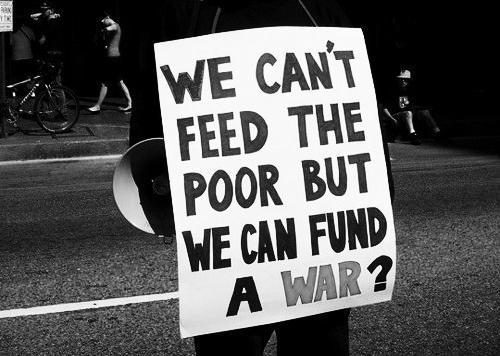
I would like to call attention to its lasting effects, as well as to the lasting effects of the fourth value this country was raised on: 'life, liberty, the pursuit of happiness[, and patriarchy].' I want to ask you, America, whether you are celebrating poverty and the disproportionate percentages of women, children, and people of color [and their women and children most of all] who fall below the poverty line in this country. I want to call attention to the wage gap between men and women. I want to call attention to the fact that, according to multiple very-well run audit studies by one of my professors, Devah Pager, it is easier for a white man with a criminal record than a black man with no criminal background to get a JOB in this country, and that was BEFORE the recession hit. I want you to remember the founders' cries of "No taxation without representation!" and ask yourself who exactly our legislators represent. Is the nation's best interest those of its richest or its poorest? America, are you celebrating our failing public schools? Our inability to truly separate church and state and recognize love in all its forms? The tightening and tightening of border control and anti-immigration sentiment in a land that once proclaimed 
"Give me your tired, your poor/Your huddled masses yearning to breathe free" --Emma Lazarus, "The New Colossus", mounted inside the Statue of Liberty
America, have we EVER truly been the land of the free? Certainly not when my man Freddie was talking to you, certainly not now while we have the highest incarceration rates in the entire world. Certainly not now when getting caught with a bag of weed can lose not only your liberty, by sending you to prison, but also silences your voice (as many states ban ex-felons from the ability to vote), and makes it impossible to break the cycle of poverty and self-destruction (as you cannot receive federal financial aid or welfare).
"What, to the American slave, is your 4th of July? I answer: a day that reveals to him, more than all other days in the year, the gross injustice and cruelly to which he is the constant victim. To him, your celebration is a sham; your boasted liberty, an unholy license; your national greatness, swelling vanity; your sounds of rejoicing are empty and heartless; your denunciations of tyrants, brass fronted impudence; your shouts of liberty and equality, hollow mockery; your prayers and hymns, your sermons and thanksgivings, with all your religious parade, and solemnity, are, to him, mere bombast, fraud, deception, impiety, and hypocrisy—a thin veil to cover up crimes which would disgrace a nation of savages. There is not a nation on the earth guilty of practices, more shocking and bloody, than are the people of these United States, at this very hour.
Go where you may, search where you will, roam through all the monarchies and despotisms of the old world, travel through South America, search out every abuse, and when you have found the last, lay your facts by the side of the everyday practices of this nation, and you will say with me, that, for revolting barbarity and shameless hypocrisy, America reigns without a rival."
So I ask you, how much has changed? I don't want to feel like I've abandoned my people--American women, American children, American people of color--by wearing my red, white, and blue today.


Maya