Friday, December 14, 2012

Photoset

"Our society--the society we have made--creates criminogenic conditions in our sprawling urban ghettos, and then acts out rituals of punishment against them as some awful form of human sacrifice." -- Glenn C. Laury
"A black boy born in 2001 has a one in three chance of going to prison in his lifetime and a Latino boy a one in six chance of the same fate. The US has the highest incarceration rate in the world: 7.1 million adult residents--one in 33--are under some form of correctional supervision including prison, jail, probation, or parole." -- Marian Wright Edelman
"There are more African-Americans under correctional control today--in prison or jail, on probation or parole--than were enslaved in 1850, a decade before the Civil War began." -- Michelle Alexander
"When Angela Davis attacked the prison system, she talked about perhaps 250,000 or 300,000 people imprisoned throughout all of the US as a problem to be dealt with, a crisis, a situation that bordered on fascism. Fast forward 30-40 years to the present, today [there are] more than 300,000 prisoners in California alone, one state out of fifty. The imprisonment in California alone exceeds that of France, Belgium, and England--I could name 4-5 countries combined." -- Mumia Abu Jamal
"The prison-industrial complex is not only a mechanism to convert public tax money into profits for private corporations; it is an essential element of modern neo-liberal capitalism. It serves two purposes. One, to neutralize and contain huge segments of potentially rebellious sectors of the population, and two, to sustain a system of super-exploitation, where mainly black and Latino captives are imprisoned in white rural overseer communities." -- Assata Shakur

Wednesday, December 12, 2012

Sometimes it's hard being a social scientist who grew up poor.

I'm listening to a presentation on an in-depth-interview-based study of SNAP and low-income family food security at work. It's still really, excruciatingly difficult for me to listen to academics and other researchers talk about coping strategies that my family used, ways of living that I didn't know weren't normal for the majority of my childhood.
Using my new technical jargon from being in my field of study/line of work, I now have the vocabulary to say that while I was growing up, my family often fluctuated between being food secure and food insecure. I remember being shocked when I would go to friends' houses and be shocked by the fact that they had cabinets full of snacks, and would open the cupboards and offer me whatever I'd like. Food was regulated in our house. You had to ask if you could have a bowl of cereal--and it was only supposed to be before school in the morning, not as an after-school snack. We never had cookies or snack cakes lying around. 

The refrigerator being full happened once a month, after my mom's first paycheck, and the rest of the month was spent watching it slowly dwindle. The second paycheck had to pay the rent (later, the mortgage) and the bills, so we got used to opening the fridge knowing there was little in there. Fresh fruits were a rarity, because they didn't last long enough to be worth their price--we had fruit cups. Jello was fruit. We clipped coupons. To this day, when I go to the grocery store, I find it difficult to pass by something I eat that is on sale without buying it. Looking back, I remember my mom making dinner for my brother, sister, and I, and not eating herself. When I was a kid, I believed that she wasn't hungry. I know better now. I was on free lunch through elementary school, and I honestly don't know how we would have survived otherwise. Summers were especially hard because suddenly we had to fend for ourselves.

The lecturer said that the first bill to get skipped when families are short on food funding is cable and/or internet, the second is the cell phone, and the third is the utilities.I know that there were bills we alternated paying--you can skip the electric bill for a month before they cut your lights off. The lecturer is calling this "robbing Peter to pay Paul." I thought that was just how the world worked. I remember once, when I was in 5th or 6th grade, our water got shut off, and we didn't have the money to cover what we owed, so we went to Walmart and bought the cheapest jugs of water they had, and filled up the bathtub. My brother, sister, and I all bathed in that cold water for two days while we waited for my mom and stepdad to scrounge up the money to turn the water back on. Cable was a luxury. We quickly learned not to ask why the channels were gone, or when they'd be back. We didn't turn the heat on until there was snow on the ground, if then. We NEVER turned the AC on. That's what blankets and windows are for. We went without a car for months because we couldn't afford repairs, and the cost of my mom taking the bus to and from work during the intervening time just took money away from other necessities.

Even now, I helped my mom and grandmother pay for Thanksgiving this year. Since I went away to college, money has traded hands between my mother and I one way only, and not the way you'd expect--I know that I am a lifeline for my mother in the way my grandmother used to be when she was working. I worry that she still isn't turning her heat on early enough, or that the fridge is still near-empty towards the end of the month, now that we're both paying for my little sister to go to school. I marvel at how effectively my mom managed our un-awareness of how short we were on money, food, and other necessities, and I worry about what she does and doesn't tell me now. Insulation is scary.

Relevant to my life right now:


On partying, getting laid, and grey areas of consent.

[TW: rape]

This is a post about alcohol, sex, and consent. I am not writing this post as a person who feels that anything sexually violating has ever happened to her in any state of sobriety. I want to make that clear. To the best of my knowledge, I am also not writing this as a person who has made any other person of any other gender feel sexually violated in any state of sobriety (though, like the author of the article I will reference later, perhaps I have and I just don't know). I also want to make that clear (especially my small feeling of uncertainty).

The place I am coming from writing this post is as a woman who considers herself to be a sex-positive feminist who likes to drink and oftentimes likes to be sexual when she has been drinking, as a woman who has, in fact, gone out for a night of partying looking to get laid and been successful in this pursuit. I want to make that clear, too. 

Coming from and not coming from all of those specific places, I have to say that I...don't understand a lot of the conversation that happens around drunkenness, consent, and the scary things like rape that those conversations tend to turn to. 

Before you start yelling at me, let me say what I do understand. I do understand that consent is important, obviously. I understand that "no means no" is an ineffective rape-prevention strategy, and that one should absolutely never ever initiate sexual contact with someone who is obviously not in a state to say yes or no. So no one who is asleep, or so drunk they can't stand up or just booted all over the place, or so high that they don't make any sense and you can't quite tell whether they're looking at you or through you. That all makes crystal clear sense to me.

But what about someone who we know has definitely been drinking, but does not appear to be too drunk to take care of him or herself or be rational? We can't possibly be saying that drinking totally negates anyone's ability to consent to sexual activity, can we? Where, in the real world where we can't breathalyze everyone we meet a party, do we draw the line of can-reasonably-give-consent? 

Feministe has a big problem with a blog I don't really take issue with that often, The Good Men Project (GMP). Yesterday, GMP published an admittedly fairly nauseating article by a man who has come to realize that in the course of his life of partying, he has likely committed and been the victim of rape. The nonchalance with which he accepts this as part and parcel of the partying lifestyle is appalling, and it surprises me that I'm supporting anything in an article with this title, but I think the author has a few shining pieces of insight buried in all of the general dickishness. I am going to highlight them here:
That is the damnable thing. We all cluck our tongues at those evil bastards who force themselves on girls—or guys—who are insensibly passed out. At the same time, we all acknowledge that a glass or two of wine helps pave the way for a lot of good times. And in the trackless, unmappable gray swamps in between, we cough and change the subject.
In the real world, especially among experienced drinkers, being blackout drunk doesn’t necessarily look like being passed out on the floor, helpless prey for any passing predator. It can look like being drunk, but fully in control. It can look like being passionately excited. It can look like being a great dancer. It can look like being very sexually aggressive.
The truth of the matter is, everybody's drunk looks a little bit different. My chronology of drunkenness goes a little something like this (assuming a not-empty stomach). At fewer than three drinks, I am questioning whether there is, in fact, alcohol in the beverages I am consuming. Between three and four, my head starts to feel tingly. Ah, it's working. Between five and seven, I appear my drunkest. This stage of the night is when the timbre of my voice changes and my speech patterns begin to lilt, when I am most likely to gesticulate wildly or greet everyone I see with a hug. Wheeeeee alcohol is fun!! But by drink 8, most of that fades away. By drink 8, I am settling into a long night of drinking. I am comfortable in my drunkenness. I remember how it fits, and my voice and speech patterns return to normal. Mmmm, drinking makes me feel so warm and snuggly. Many people think I'm far more sober at 10 drinks in than I was at 5. And that can continue into somewhere around 15 or so, at which point shit will get bad quick and I will probably find myself a toilet to boot into and a couch upon which to fall asleep. Shit, why is the room spinning? This room definitely doesn't usually spin... 

At what point of that progression is a potential sex partner supposed to cut me off as unable to give consent? Obviously once the room has spun and I'm asleep on the couch, but what about before that? I might not have a great sense of chronology the next day, but nowhere in the progression am I blackout -- is there a point at which my consent somehow doesn't count? That seems...restrictive. "No" means no. Non-responsiveness means no. But I'm pretty uncomfortable with any definition of what is and is not okay when one combines alcohol and sexytime that involves qualification of when a "yes" or non-verbal enthusiastic participation means no. I just don't get how that shit is supposed to work. I think that at anywhere between 1 and 12-14 drinks, I am perfectly capable of giving consent.

But many girls (and some guys) would be far past coherent at that number. Many girls (and some guys) would have blacked out (and, like the author of the article points out, blacked out in a myriad of ways that could look perfectly normal) by that point. And we don't all carry breathalyzers in our back pockets at the club. (Imagine it: "Here baby, blow on this first..." No.) So what's a person who likes to drink and likes to get physical, possibly with person(s) he or she may not know particularly well/at all, when he or she has been drinking to do? 

This brings me to the second instance wherein I think the author of the article was rather poignant:
It must be bad manners to admit to being a rapist and to also say one is a rape survivor, all in one article. I don’t know any set of social mores where that’s okay. I certainly don’t feel like a rape survivor, whatever that’s supposed to feel like. I just can’t quite find a workable standard where I’m one but not the other.
I think one of the strongest points of the article is here, where the author reminds readers that when you're drinking/drugging yourself to delirium, you can fall on either side of the blurry line of consent. He tells us of one instance in which he was informed that he'd had sex with a woman he wasn't interested in involving himself with sexually or otherwise days after the fact by multiple witnesses. That, by definition, constitutes rape. Regardless of the fact that he doesn't view himself as having been victimized, I don't think he blames himself and his drinking for the actions he doesn't remember in this instance. I don't think he blames the women he may or may not have had consensual sex with in the past or their drunkenness for his or their actions in the past either. I don't think that what we are supposed to take from this article is that partying causes rape, or excuses it. I think that what we are supposed to take from this article is that there is a muddiness in this particular sphere wherein sex often happens in the presence of consent that may not be worth its breath.

And this brings me to the third instance wherein I feel some valuable insight was laid on the page:
The ones that bother me are the ones where I got loaded, had some fun with a lady, and then she never wanted to contact me again. Messages go unanswered, social contact is dropped.
There are men, rape-apologist pieces of shit, who will tell you that women cry “rape” every time they have sex they later regret. I carry no brief for those assholes. What eats at me is that there’ve been cases, more than one and less than six, in my life where either explanation would seem plausible. If a woman had consensual sex with a guy because they were both drunk, and later she decided he was a loser and she regretted it, she might refuse to have further contact with him because, hey, awkward. But if a woman was raped by a man who thought she was still capable of consent when she was too far gone, she might refuse to have further contact with him because, hey, rapist.
Once, on campus, a guy started dancing with me at a party. I didn't know him, and he hadn't been at this party for most of the night, so I had no background knowledge of how drunk or not drunk he was. He started kissing the back of my neck and feeling me up, and being receptive to all of this, I turned around and actually kissed him. We'd been making out for a while before the music stopped and I decided to ask his name. We both ended the night with orgasms, and a few days later I used the minimal amount of information I'd gathered about him that night to friend request him on Facebook. It took him 10 months to approve my request. 

Another time, in DC, I met up with a guy I'd met recently and a friend of mine from school to celebrate the guy I'd met recently's birthday. When I got there, it was clear to me that he'd started celebrating quite a few hours earlier, because he was far more animated than he'd been the first time we met. Within ten minutes of my arrival, this guy started dancing with me, which led to him kissing the back of my neck and feeling me up, which I was overwhelmingly receptive to, and we wound up pressing each other against the wall of this club making out with no holds barred. We haven't really talked since.

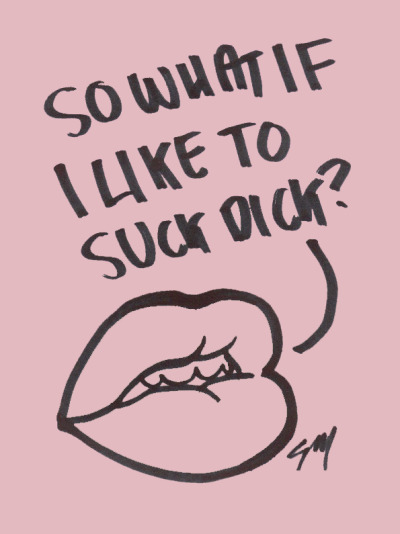
I had not thought this prior to reading this article, but am now wondering, did I take it too far with either of those guys? Should I have deemed their consent invalid regardless of the fact that they initiated our sexual contact? If a guy that I know has been drinking or is relatively drunk takes my hand and puts it on his dick, am I allowed to touch it, or have I just admitted to being on the other side of the blurry line?

In the post explaining why GMP decided to publish this post, female editor Joanna Schroeder says,
But the real world is a harsh, cold place full of mixed messages, drunken desire, Ecstasy-fueled touching, and the rush of cocaine. The real world is a place where “no means no” simply isn’t enough.
I agree with her. Wholeheartedly. I don't really agree when she later says that the author of the article is "deeply troubled," because again, he comes off unsettlingly content with his realizations. I think this guy is an asshole. At the same time, though, I don't think he's wholly wrong. And at the same time, I don't really agree with Feministe and other critics who have called this post and the why-we-posted-this post "rape apologies," because I think that, for better or for worse, they come from a point of questioning and cross-examining, rather than from a point of saying "I'm sorry." If the author of the article is saying he's sorry for anything, it's that he's sorry it has to be like this, and that's not an apology.

What I think is that we as feminists, as men, as women, as people who drink, as people who have sex, and just as people, need to be willing to have conversation around what happens when you mix drinking and/or drugs and sexual desire. I think we'd be doing a disservice to ourselves and the people we care about not to. I think the point of this article was to show that we can't have productive conversations about rape culture without having conversations about party culture and the complications of consent therein.

Tuesday, December 11, 2012

At Last...

He and his husband are both in the Navy. He was quoted as saying this has been a "really, really big year for them."
I just found out that Etta James's "At Last" was the first dance song at the wedding reception following Seattle's first day of marriage equality, wherein 138 same-sex couples said their vows, exchanged their rings, and sometimes debated who was taking whose last name, and I am in literal tears.


Monday, December 10, 2012

"Let's start by pointing out that intersectionality isn't such a scary word, and gasp, plenty of people who haven't been university-educated are capable of looking it up and understanding it. Here's a good definition. It's not that hard to understand. It's essentially a useful way of saying that things like sexuality, race, class, religion, and ability overlap. For example, a White woman's experience of sexism may be vastly different from a Black woman's. Has your brain died from exhaustion yet? It's so condescending to suggest that non-academics just aren't smart enough to get this."

(via Tudo Bom(b)) 

Sunday, December 9, 2012

What if we stigmatized other diseases like we stigmatize HIV?

Reblogged from come correct

Putting an end to AIDS is not that simple. Putting an end to discrimination should be.

Fuck yeah Sweden

Because shooting shit with foam balls is fucking awesome, regardless of what's between your legs.

Reblogged from feministing
 

Photo

Reblogged from come correct

"A woman who writes has power, and a woman with power is feared."
--Gloria Anzaldua

(via Free Bird)

#realtalk

Reblogged from Tudo Bom(b)

I need this on everything for a certain friend of mine.

"Just because two people are capable of deeply hurting each other over and over again does not make them passionate, star-crossed lovers. It makes them two people who keep doing terrible things to each other. Someone's ability to make you completely and utterly soul-crushingly miserable does not mean that they are a soul mater with some deep insight into your psyche. They are just someone who is really good at making you unhappy."
--Andrea Greb

(via Tudo Bom(b))

Style Crush

Reblogged from
18-15n-77-30w

Would put this in my house

Reblogged from Tudo Bom(b)

"People will kill you over time, and how they'll kill you is with tiny, harmless phrases, like 'be realistic.'"
--Dylan Moran

Saturday, December 8, 2012

Photo

Reblogged from Lavender Labia

The entire premise of the film "The Impossible" disgusts me.


The trailer played when I saw Anna Karenina and then again when I saw Perks of Being a Wallflower, and both times elicited a visceral reaction of disgust from me, like seeing a cockroach or getting a big whiff of garbage truck while I'm walking to work. The words that flash across the screen during the trailer are as follows: "In 2004...tragedy struck southeast Asia...This is one family's true story of survival."

...Note that the entire premise of the film has been established now that we are 47 seconds into the trailer, and we. have. yet. to. see. a. southeast. Asian. person. Because OBVIOUSLY the ONLY possible way to make a movie about the tsunami that will do well in an American market is to whitewash it so completely that the 75,000+ Southeast Asian people who died in this tragedy aren't even mentioned, so that the focus of the film is rather a British family who was vacationing at the time, because then it's like this could happen to you, American moviegoer who is presumed to be white and wealthy enough for vacationing in Southeast Asia to be a feasible possibility in your life. Because Southeast Asians aren't people you can relate to, obviously. Their deaths are a statistic--this British family's true story of survival is an emotional triumph! 

If you can stomach watching the rest of the trailer, you see that we finally see people of color at a minute and 28 seconds in! The movie is set in Southeast Asia and it took 60% of the trailer before we saw a person of color. Okay. It's actually a group of people of color. What are they going to do? Oooh look, it's as if they've been magically conjured to save the poor injured white woman, who will weep and profess her thankfulness. Oh, they're gone so quickly, appearing only for a few seconds. Wait...we never see them again? BUT I THOUGHT THIS MOVIE WAS ABOUT A TRAGEDY IN SOUTHEAST ASIA. 

To paraphrase the quote at the end of the trailer, "Nothing is more powerful than the human spirit people's sympathy for unsuspecting White people."
"Never neglect the little things. Never skimp on that extra effort, that additional few minutes, that soft word of praise or thanks...you can never do your best, which should always be your trademark, if you are cutting corners and shirking responsibilities. You are special. Act it."
--Og Mandino

(via come correct)
"Our culture teaches us about shame--it dictates what is acceptable and what is not. We weren't born craving perfect bodies. We weren't born afraid to tell our stories. We weren't born with a fear of getting too old to feel valuable. We weren't born with a Pottery Barn catalog in one hand and heartbreaking debt in the other. Shame comes from outside of us--from the messages and expectations of our culture. What comes from inside of us is a very human need to belong, to relate."
--Brene Brown
I Thought It was Just Me: Women Reclaiming Power and Courage in a Culture of Shame

*moans audibly*

Reblogged from Free Bird